
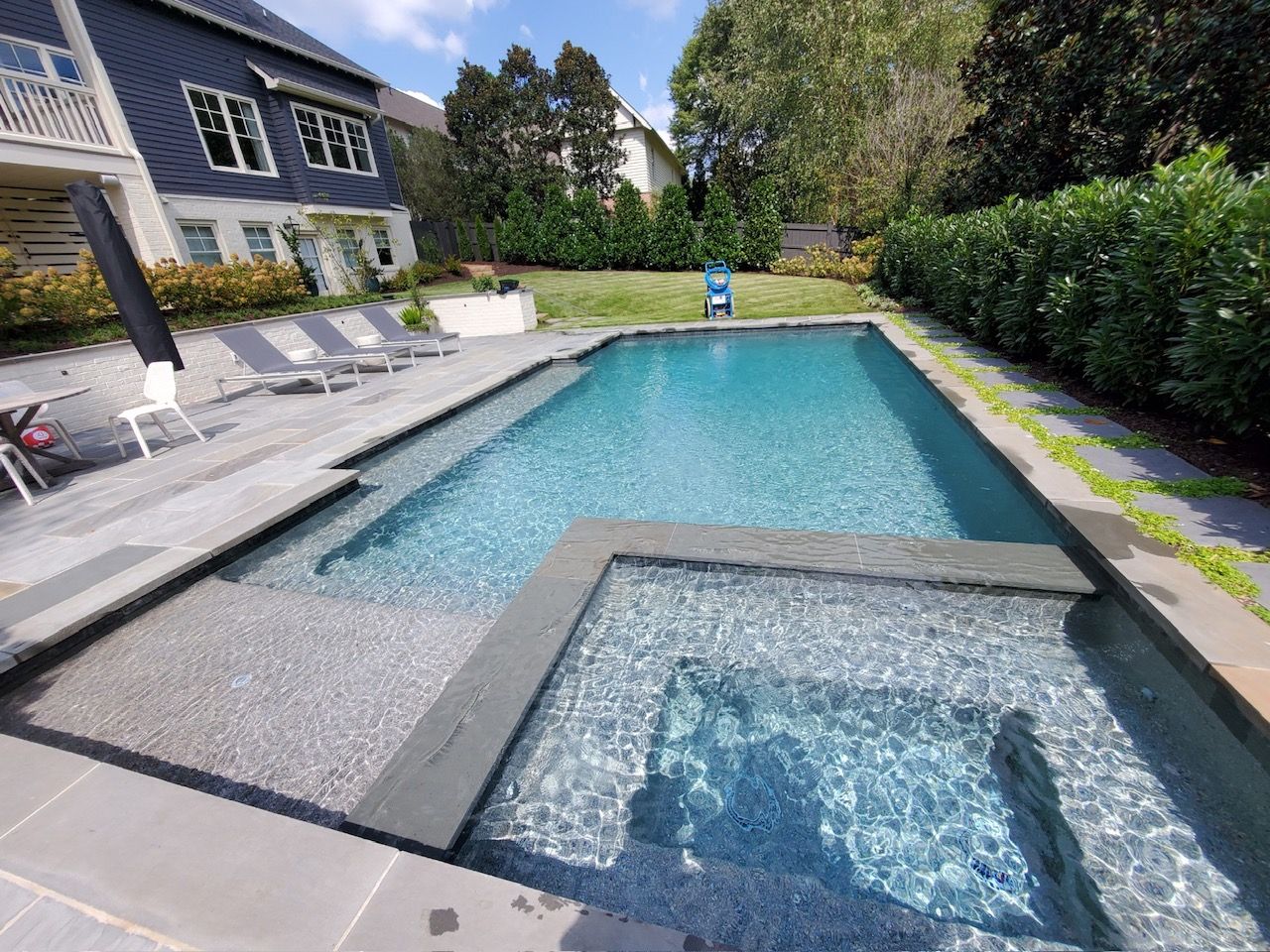
Bring Worn Out Pool Surfaces Back to Life
Pool Renovation in Cumming for faded plaster, cracked tile, or outdated finishes that no longer match your home
Mountain View Pools LLC handles pool renovation projects throughout Cumming, Georgia, helping homeowners update aging pools that no longer function or look the way they once did. You may notice your pool surface has become rough underfoot, or the tile line has cracked and started pulling away from the shell. The equipment may run louder than it used to, cycling more often without maintaining the same clarity or temperature. Renovation work addresses these functional and cosmetic failures by replacing worn components, upgrading outdated systems, and refinishing damaged surfaces so your pool operates efficiently and fits the way you use your outdoor space now.
A typical renovation includes removing the old plaster or aggregate finish, repairing any structural cracks in the gunite shell, and applying a new interior surface that restores a smooth, watertight seal. If your pool deck has settled unevenly or the coping has separated from the beam, those elements are reset or replaced during the same project. Equipment upgrades often involve swapping single-speed pumps for variable-speed models, replacing cartridge filters with larger units, or adding automation controls that let you manage temperature and sanitization from a phone. The scope depends on what has deteriorated and what improvements make sense for how you use the pool.
If your backyard layout has changed or your pool no longer suits your needs, a renovation consultation can identify which updates will deliver the most noticeable improvement.
What Changes During a Pool Renovation
When you renovate an existing pool, you gain the opportunity to correct problems that have developed over years of use and exposure. The interior surface is stripped down to the shell, giving access to repair cracks, address leaks at fittings, and apply a finish that bonds cleanly to prepared concrete. You choose from options like white plaster, quartz blends, or pebble finishes depending on texture preference and expected longevity. Tile is replaced along the waterline, coping stones are reset level with the deck, and any plumbing or electrical lines that need updating are rerouted before the final surface goes in.
After the work is complete, you will see a pool surface free of staining and rough patches, with tile that sits flush and coping that no longer shifts when you step on it. The water will hold its chemistry more consistently because the new finish does not leach minerals or harbor algae in pitted areas. Pumps and heaters operate more quietly, and if automation was added, you will control settings without walking out to the equipment pad. Mountain View Pools LLC coordinates each phase so the pool is drained, prepped, resurfaced, and refilled in a planned sequence that avoids delays or rework.
Renovation timelines depend on the extent of structural repairs and whether you are adding features like bench seating, sun shelves, or updated lighting. Hardscape changes around the pool perimeter, such as resetting pavers or pouring new concrete decking, extend the schedule but are often completed during the same mobilization to avoid separate site visits. Permits are required for electrical and structural modifications, and inspections occur before the pool is refilled and balanced.
Questions About Renovating an Existing Pool
Homeowners in Cumming often ask how renovation differs from basic resurfacing and whether older pools can accommodate modern features without starting over.
What does resurfacing include compared to a full renovation?
Resurfacing replaces only the interior finish, while renovation may also involve structural repairs, equipment replacement, tile and coping updates, and plumbing or electrical work depending on what has deteriorated.
How long does a renovated pool surface typically last?
A properly applied plaster finish lasts eight to twelve years, quartz blends extend that to twelve to fifteen years, and pebble finishes often exceed fifteen years before requiring replacement.
When should you replace pool equipment during a renovation?
You replace pumps, filters, or heaters when they no longer meet efficiency standards, require frequent repairs, or cannot support added features like heating or automation that you want to include in the updated pool.
Why do some pools develop cracks after resurfacing?
Cracks appear when the underlying shell was not properly repaired before the new finish was applied, or when bond coat was applied to a surface that was not clean and profiled correctly.
How does climate in Cumming affect renovation timing?
Scheduling work during moderate temperatures allows plaster and bonding materials to cure without excessive heat or cold, which can cause surface defects or delayed strength gain in the finish.
Mountain View Pools LLC evaluates your existing pool structure and equipment to determine which updates will restore function and appearance without unnecessary cost. If your pool has become a maintenance burden or no longer fits your outdoor space, a renovation plan can outline what needs replacement and what remains serviceable.